

Core Systems & Technical Architecture
- Ultra-Large-Scale Hydrogen Storage & Multi-Stage Compression System
The station integrates a modular high-pressure hydrogen storage system with a total volume exceeding 120 cubic meters, operating at dual pressure levels of 45MPa and 90MPa. It is equipped with six independently operable, parallel liquid-driven compressor units, each with a 500 kg/day capacity. Intelligent dispatch enables dynamic allocation and redundant backup of the hydrogen source, ensuring stable output of the 3,600 kg/day capacity even during peak periods. - Full-Scenario Dispensing Terminals & High-Efficiency Flow Management
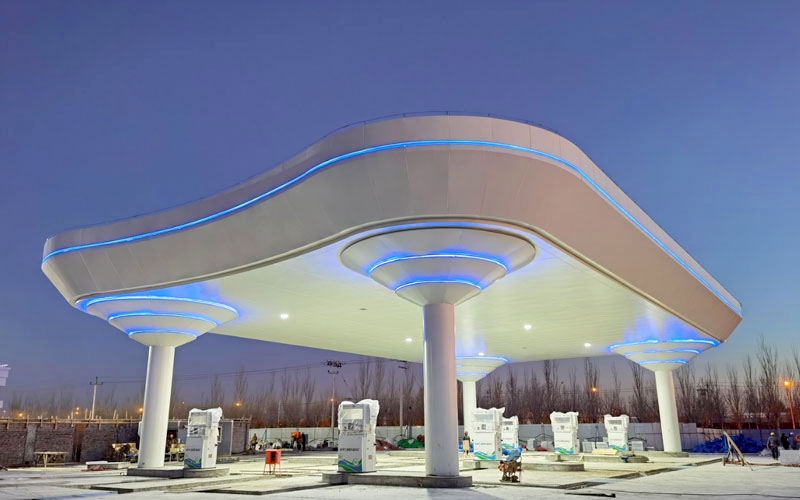
The station is configured with 12 dual-nozzle hydrogen dispensers, supporting simultaneous operation at both 35MPa and 70MPa pressure levels, allowing 24 hydrogen fuel cell vehicles to refuel concurrently. The system incorporates an adaptive pressure-flow coupling control algorithm that optimizes the refueling curve in real-time based on vehicle type and ambient temperature, reducing single refueling time by over 15% compared to industry standards. - Multi-Layer Intelligent Safety & Risk Prevention System
The project establishes the world's first "Three-Level Risk Isolation, Four-Level Intelligent Monitoring" safety architecture in the hydrogen station sector:- Physical Isolation: Independent layout of storage, compression, and dispensing zones, equipped with blast walls and directional pressure relief devices.
- Process Monitoring: Incorporation of fiber optic sensing and laser gas imaging technology for real-time imaging and of micro-leaks across all station piping.
- Emergency Response: An Emergency Shutdown System (ESD Level 2) with self-diagnostic capabilities and a fault response time of <200 milliseconds.
- Intelligent Energy Management & Digital Twin Operation Platform
A dynamic simulation system for the entire station is built on digital twin technology, enabling:- Supply-Demand Forecasting: Intelligent prediction of refueling peaks using traffic flow data for pre-emptive compressor scheduling.
- Equipment Health Management: Predictive maintenance for compressors through fused analysis of vibration, temperature, and current parameters.
- Carbon Footprint Tracking: Real-time calculation of carbon reduction per refueling event and automatic generation of green hydrogen consumption certification reports.
Engineering Execution & System Integration Breakthroughs
As an ultra-large-scale, complex hydrogen infrastructure project, it successfully overcame world-class engineering challenges such as vibration suppression in multi-compressor parallel operation, fatigue life optimization for large-scale high-pressure piping, and validation of safety interlock logic
Post time: Sep-19-2022


